spilleautomater med høj rtp — hemmeligheder bag RTP og hitfrekvens i 2026
spilleautomater med høj rtp er et must-play for enhver slotentusiast, der værdsætter kvalitet og innovation. Spillet byder på masser af action og uforglemmelige øjeblikke, og dets RTP ligger over gennemsnittet. For at få det optimale ud af din spilletid anbefales det at holde øje med automater med høj udbetaling, som er nøglen til mange af spillets hemmeligheder.
one casino login — opret konto hurtigt | one casino
See also:
- Sådan finder du de bedste automater med høj udbetaling
- højeste rtp spilleautomater – en introduktion til begyndere
- Forstå mekanikken bag online spilleautomater høj rtp
- RTP-eksempler for populære spilleautomater med forskellige mekanikker
- Bonus- og omsætningsvilkår du bør kende, før du spiller
- Eksempler på spilmekanikker i populære spilleautomater
- Sådan sammenligner du online spilleautomater høj rtp på tværs af spil
- Er online spilleautomater høj rtp sikkert at bruge?
- Bonus Køb-funktioner: Fordele og ulemper ved at betale for bonus
Sådan finder du de bedste automater med høj udbetaling
The decision to buy a feature is rarely a spontaneous one; it is the culmination of a deliberate process that begins with recognizing a gap between what a product currently offers and what its users desperately need. This gap often surfaces through a torrent of support tickets, a chorus of feature requests on public roadmaps, or the quiet churn of customers who leave without explanation. When the product team finally convenes to discuss the possibility, they are not simply weighing a checklist of technical specifications; they are evaluating a bet on user behavior, market timing, and the delicate balance of resource allocation. The first step is to define the problem with surgical precision—not just ‘users want X,’ but ‘users in segment Y, performing workflow Z, are blocked by the absence of X, which costs them an average of 4.2 hours per week, as evidenced by our telemetry and follow-up interviews.’ This clarity transforms a vague desire into a testable hypothesis, one that can be validated through mockups, clickable prototypes, or even a concierge-style manual workaround that simulates the feature before a single line of code is written. The team must then assess whether the feature aligns with the product’s core value proposition; a shiny analytics dashboard might delight power users, but if the product’s promise is simplicity for novices, it could dilute the brand and confuse the onboarding flow. Concurrently, the engineering lead estimates the effort—not just in raw hours, but in opportunity cost: what other bugs, performance improvements, or compliance updates will be deferred? A feature that takes six weeks to build might push a critical security patch by a quarter, and that trade-off must be made explicit to stakeholders. Financial modeling enters the picture: will this feature drive new logo acquisition, reduce churn, or enable an upsell to a higher tier? Each outcome has a different present value, and the team often builds a simple decision tree with confidence intervals, acknowledging that the uncertainty around adoption rates is wider than the uncertainty around cost. Competitive pressure also plays a role; if a rival has already shipped a similar capability, the calculus shifts from ‘should we?’ to ‘how quickly can we match or exceed it?’—but this urgency must be tempered by the reality that a rushed, half-baked feature can do more damage than its absence, generating negative reviews and eroding trust. The buy decision is not solely internal; it may involve purchasing a third-party component, an API, or a white-label solution that accelerates delivery. This procurement path requires due diligence: evaluating the vendor’s uptime, security posture, pricing model, and exit strategy in case the partnership sours. A feature built on a shaky external dependency is a ticking time bomb, especially if it handles sensitive data or sits in the critical path of user workflows. Once the team has gathered all this evidence, they convene a cross-functional review with product, design, engineering, sales, and support, where each department presents its perspective. Sales might argue that the feature is a ‘must-have’ for closing three enterprise deals in the pipeline, while support notes that its absence generates 30% of all inbound tickets, and design warns that the current UI has no natural place to expose the functionality without causing cognitive overload. The discussion is often heated, but the goal is not consensus; it is a shared understanding of the trade-offs, so that the final decision—whether to buy, build, or postpone—is made with open eyes. In the end, the actual ‘buy’ is a commitment to a roadmap item, a budget line, and a promise to users that their feedback has been heard. It sets in motion a series of sprints, user acceptance testing, beta programs, and eventually a launch that is celebrated with a changelog entry and a blog post. But the true measure of success comes months later, when the team reviews the adoption curve, the support ticket volume related to the feature, and the net promoter score shift. If the feature was bought wisely, it becomes invisible—a seamless part of the product that users take for granted. If it was bought poorly, it becomes a costly lesson, a reminder that every feature request is a hypothesis, and every buy is a gamble that must be managed with rigor, empathy, and a willingness to say ‘no’ more often than ‘yes.’ The discipline of prioritization is the unsung hero here; it ensures that the features we do buy are the ones that matter most, that the engineering hours are spent on differentiation rather than parity, and that the product evolves in a way that is both responsive to user needs and true to its strategic vision. This process, though bureaucratic at times, is what separates a product that merely exists from one that thrives in a crowded marketplace.
højeste rtp spilleautomater – en introduktion til begyndere
variants are distinct versions of a biological entity—such as a gene, protein, or organism—that arise from differences in their underlying genetic sequence or structural organization. In the context of genetics, a variant typically refers to a specific alteration in the DNA sequence compared to a reference genome, which can range from a single nucleotide change (SNP) to large structural rearrangements like insertions, deletions, duplications, inversions, or translocations. These variants can be classified based on their frequency in a population (common vs. rare), their predicted functional impact (synonymous, missense, nonsense, frameshift, splice site), or their association with disease (benign, pathogenic, or of uncertain significance). For example, a missense variant in the BRCA1 gene may substitute an amino acid in the protein’s functional domain, potentially disrupting its tumor suppressor activity and increasing the risk of breast and ovarian cancer. In contrast, a synonymous variant might not alter the amino acid sequence but could still affect gene expression by influencing mRNA stability or splicing regulatory elements. Variants can also arise in non-coding regions, such as promoters, enhancers, or introns, where they may modulate transcription factor binding, chromatin structure, or microRNA interactions, thereby fine-tuning gene regulation. In oncology, somatic variants are acquired during an individual’s lifetime and are often key drivers of tumorigenesis, whereas germline variants are inherited and present in every cell, contributing to hereditary cancer syndromes. The detection and interpretation of variants have been revolutionized by next-generation sequencing technologies, which allow whole-genome, whole-exome, or targeted gene panels to identify millions of variants per sample. However, distinguishing pathogenic variants from benign polymorphisms requires robust computational tools, population databases like gnomAD, and functional assays to assess biological consequences. In evolutionary biology, variants represent the raw material for natural selection, where beneficial variants increase in frequency over generations, leading to adaptation and speciation. For instance, the lactase persistence variant in the MCM6 gene, which keeps the lactase enzyme active into adulthood, arose independently in multiple human populations after the advent of dairy farming, illustrating convergent evolution. In viral populations, variants emerge rapidly due to high mutation rates and recombination, as seen with SARS-CoV-2, where certain variants like Delta and Omicron have altered transmissibility, immune evasion, and disease severity, prompting global surveillance and vaccine updates. In agriculture, variants are harnessed through selective breeding and genetic engineering to improve crop yields, disease resistance, and nutritional content. For example, the semi-dwarfing variants in wheat and rice genes (Rht and sd1) were pivotal in the Green Revolution, allowing plants to allocate more energy to grain production rather than stem elongation. In pharmacogenomics, variants in drug-metabolizing enzymes (e.g., CYP2D6, CYP2C19) can influence drug efficacy and toxicity, leading to personalized dosing strategies. For instance, poor metabolizers of CYP2C19 may require reduced doses of clopidogrel to avoid adverse cardiovascular events, while ultrarapid metabolizers might need alternative therapies. In the context of CRISPR-based gene editing, variants can be intentionally introduced to study gene function, correct disease-causing mutations, or create novel traits, but off-target effects and mosaicism remain challenges. In population genetics, variants are used to infer demographic history, migration patterns, and natural selection signatures, as exemplified by the high frequency of the CCR5-Δ32 variant in Northern Europeans, which confers resistance to HIV infection but may have been selected for due to past plague outbreaks. In clinical diagnostics, variants are reported according to standardized guidelines from the American College of Medical Genetics and Genomics (ACMG), which classify them into five tiers: pathogenic, likely pathogenic, uncertain significance, likely benign, and benign. This classification relies on evidence such as population frequency, segregation in affected families, computational predictions, and functional studies. For example, a frameshift variant in the TP53 gene that truncates the protein is almost certainly pathogenic, whereas a common intronic variant with no known regulatory role might be benign. However, many variants fall into the uncertain category, posing challenges for clinicians and patients, as seen in the case of VUS in BRCA1/2 that complicate risk management decisions. To address this, initiatives like ClinVar and the Clinical Genome Resource (ClinGen) curate variant interpretations and share them globally, improving consistency and reducing ambiguity.
Forstå mekanikken bag online spilleautomater høj rtp
Megaways – dynamiske gevinstveje og kaskaderende hjul
Megaways-mekanikken har ændret måden, vi opfatter gevinstlinjer på, ved at introducere et dynamisk antal symboler på hver hjul. I stedet for de klassiske 20 eller 30 faste linjer kan et enkelt spin have op til 117.649 måder at vinde på – eller endda mere, hvis spillet har en udvidet version som 248.832 måder. Hvert hjul viser mellem to og syv symboler, og antallet varierer fra spin til spin, hvilket skaber en uforudsigelig og spændende spiloplevelse. Denne variation betyder, at spilleren aldrig ved, hvor mange gevinstveje det næste spin vil byde på, hvilket øger spændingen og gør hver runde unik. Når en kombination af matchende symboler lander, udløses en kaskade- eller faldeffekt, hvor de vindende symboler forsvinder og nye symboler falder ned fra oven. Denne mekanik giver ikke kun flere chancer for at opnå kombinationer i samme runde, men kan også aktivere en stigende multiplikator, der øges for hver på hinanden følgende kaskade. For eksempel kan en kaskade øge multiplikatoren med 1x, så efter fem kaskader i træk kan gevinsterne være femdoblet. Populære titler som Bonanza og Extra Chilli har gjort dette koncept berømt, men mange nyere spil udforsker variationer, herunder Megaways kombineret med andre funktioner som gratis spins, wild-symboler i fuld højde og såkaldte reaktioner, hvor flere symboler forsvinder på samme tid. For spillere betyder det, at hvert spin kan have et helt andet antal gevinstveje, hvilket kræver en forståelse af, hvordan udbetalingsprocenterne beregnes på tværs af de forskellige måder. Det er også værd at bemærke, at nogle udbydere har udviklet deres egne fortolkninger af Megaways, såsom Cyclops eller Power Reels, for at tilføje unikke twists. Uanset varianten er essensen den samme: jo flere symboler på hjulene, jo flere måder at vinde på, og jo større potentiale for eksplosive gevinster i bonusrunden. Derudover har nogle spil introduceret funktioner som synkroniserede hjul, hvor flere hjul viser det samme antal symboler, hvilket markant øger chancen for store kombinationer. Andre spil tilføjer scatter-symboler, der kan udløse gratis spins med ekstra hjul eller højere multiplikatorer, hvilket giver endnu flere lag af kompleksitet og underholdning. For at få mest ud af Megaways-spil er det vigtigt at sætte sig ind i de specifikke regler for hver titel, da variationer i kaskademekanikken og multiplikatorernes opførsel kan have stor betydning for strategien. Samlet set har Megaways-mekanikken ikke blot øget fleksibiliteten i spildesign, men også givet spillere en mere dynamisk og engagerende oplevelse, hvor hvert spin kan føles som en ny chance for en livsændrende gevinst.
For at forstå den fulde effekt af Megaways-mekanikken er det vigtigt at dykke ned i de matematiske principper, der ligger bag. Antallet af måder at vinde på beregnes ved at multiplicere antallet af symboler på hvert hjul. For eksempel, hvis et spil har seks hjul, og hvert hjul viser mellem to og syv symboler, så kan det maksimale antal måder være 7 x 7 x 7 x 7 x 7 x 7 = 117.649. Nogle udvidelser, som f.eks. 248.
RTP-eksempler for populære spilleautomater med forskellige mekanikker
| Name | Biggest win | RTP | Year | Provider |
|---|---|---|---|---|
| Starburst XXXtreme | 8,500 | 96.6% | 2015 | NetEnt |
| Nordisk Held | 127,500 | 150 | 2023 | Quickspin |
| Star Quest | 42,800 | 150 | 2023 | Provider E |
| Great Rhino | 127,500 | 125 | 2024 | Provider H |
Bonus- og omsætningsvilkår du bør kende, før du spiller
- 500 ekstra spins på dit første indskud
- kr500 + 100 gratis spins
- 25x gennemspilskrav på 7 dage
- 45x indsatskrav på 14 dage
Eksempler på spilmekanikker i populære spilleautomater
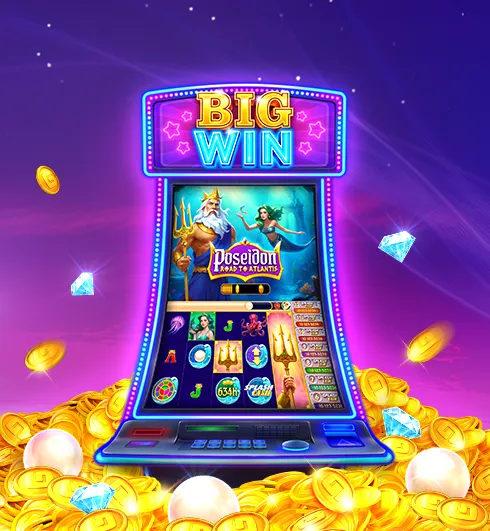
Sådan sammenligner du online spilleautomater høj rtp på tværs af spil
Er online spilleautomater høj rtp sikkert at bruge?
Hvad er Megaways-slots?
Megaways er en spilmekanik, hvor antallet af symboler på hver hjul varierer for hvert spin, hvilket giver op til 117.649 måder at vinde på. Gevinster udløses, når matchende symboler lander på tilstødende hjul fra venstre mod højre.
Hvordan fungerer Hold & Win-slots?
I Hold & Win-spil udløses en bonusrunde, hvor bestemte symboler (ofte mønt- eller juvelsymboler) låses fast på hjulene, mens de resterende hjul drejer igen. Runden fortsætter, indtil der ikke er flere spins tilbage, og alle låste symboler summeres til en gevinst.
Hvad er Cluster Pays?
Cluster Pays er en mekanik, hvor gevinster dannes ved at samle grupper af mindst 5 matchende symboler, der rører hinanden vandret eller lodret. I stedet for betalingslinjer udløses udbetalinger for hver klynge, der dannes.
Hvad er Bonus Buy-funktionen?
Bonus Buy giver spilleren mulighed for at købe direkte adgang til en spils bonusrunde for en fast pris, typisk et multiplum af indsatsen. Dette giver øjeblikkelig adgang til free spins eller andre features uden at skulle vente på, at de udløses tilfældigt.
Hvad betyder ekspanderende hjul og kaskadesymboler?
Ekspanderende hjul øger antallet af rækker (eller symbolpladser) på hvert hjul, når bestemte betingelser er opfyldt, hvilket ofte fører til flere gevinstmuligheder. Kaskadesymboler (også kaldet tumbling eller avalanche) fjerner vinderkombinationer og lader nye symboler falde ned for at udfylde tomrummene, hvilket kan udløse flere gevinster i samme spin.
Hvordan virker multiplikatorer i slots?
Multiplikatorer øger din gevinst med en bestemt faktor, fx 2x, 3x eller endda 100x. De kan være knyttet til bestemte symboler, tilfældige triggers eller akkumuleres gennem kaskaderunder, så hver efterfølgende gevinst i samme spin ganges med en højere værdi.
For nybegyndere kan spilleautomater med høj rtp virke overvældende, men det behøver det ikke at være.
expekt bookmaker — hurtig gevinst | expekt bookmaker
Bonus Køb-funktioner: Fordele og ulemper ved at betale for bonus
Spil er kun for voksne over 18 år, og hos Spillemyndigheden, som er den danske spillemyndighed, finder du regulering og tilsyn med spilmarkedet. Husk, at du altid kan benytte ROFUS, det nationale selvekskluderingsregister, til at begrænse dit spil. Har du brug for hjælp eller rådgivning, kan du kontakte StopSpillet på 70 22 28 25 – en gratis og anonym hjælpelinje. Sæt altid grænser for tid og penge, og spil udelukkende for underholdningens skyld – jagt aldrig tabte indsatser. Spil ansvarligt, og hold det sjovt.